Why Tracking Your Diecast Collection in Excel Isn’t as Good as It Sounds
At some point, almost every diecast collector tries Excel. It feels logical. Organized. Serious.
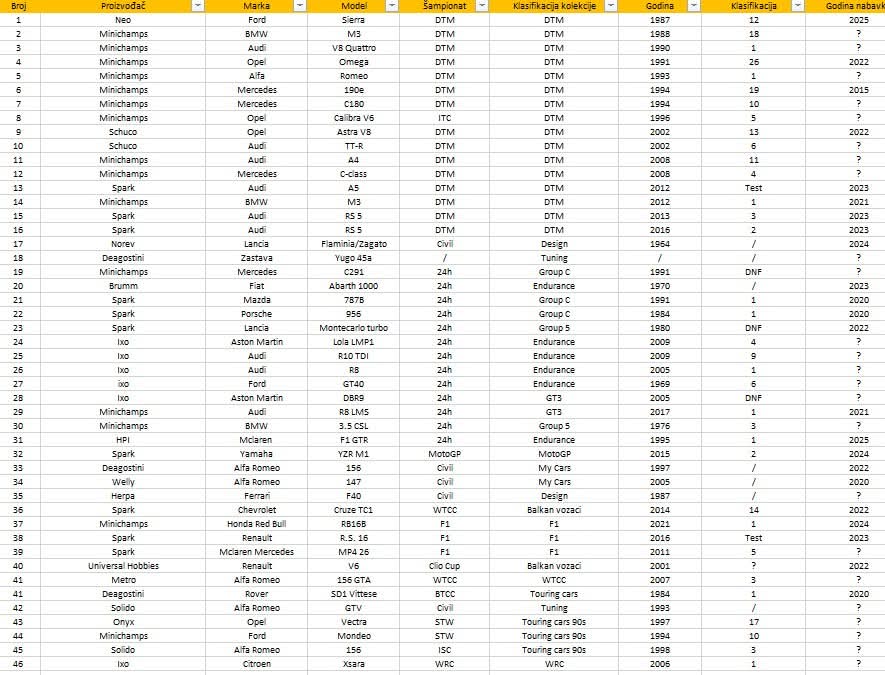
You open a spreadsheet, add a few columns like brand, model, year, color, maybe condition… and for the first 30 or 40 cars, it works just fine. Then your collection grows.
That’s when Excel starts showing its limits.
It works… until it doesn’t
An Excel sheet is manageable when your collection is small. Once you hit 150, 200, or more models, it stops being helpful and starts becoming work.
Want to check if you already own a specific car?
You’re scrolling. Filtering. Double-checking names. Hoping you spelled everything the same way months ago.
And if you’re standing in a store or at a collector meetup, opening Excel on your phone is anything but practical. Pinching the screen, scrolling sideways, zooming in and out - not exactly confidence-inspiring.
That’s how duplicates happen.
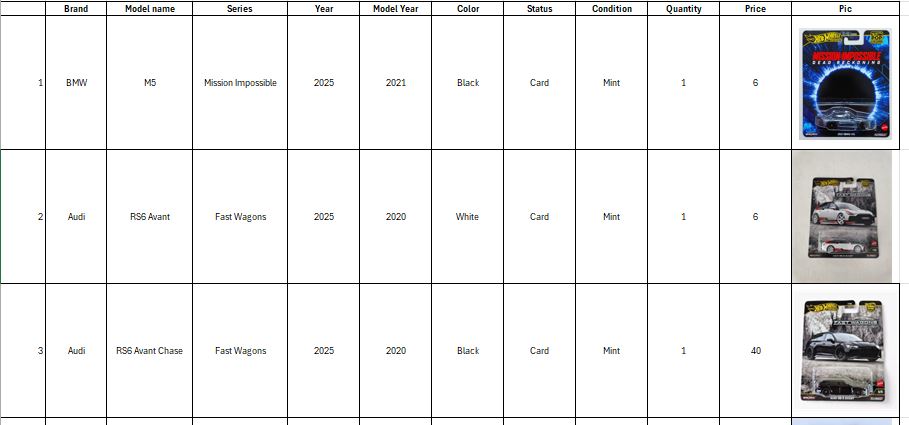
Adding photos is harder than people admit
Yes, you can add images to Excel. But realistically, that means sitting at a laptop every single time.
You’re not going to pull out your laptop, upload photos, resize them, name the files properly, and link them to cells for every car you buy. What usually happens is you tell yourself, “I’ll add the photos later.”
Later becomes weeks.
Weeks become months.
Meanwhile, you keep buying cars - and without visuals, it’s very easy to forget what you already own. Especially when it comes to similar rally versions, F1 releases across different years, or slight variations that look almost identical at first glance.
When the collection is already big, starting feels overwhelming
This is the part people rarely talk about.
If you already own a large number of models, tracking everything properly feels intimidating. Pulling cars out, cleaning them, checking versions, entering data one by one… it’s not a quick job. It takes time. Sometimes months.
Many collectors start tracking, stop, and then start again.
I’ve been there. I once tracked everything in Excel. Then a hard drive failed - and just like that, the entire file was gone. No backup. Years of tracking vanished overnight.
That experience alone is enough to kill your motivation.
The constant doubt ruins the fun
One of the most frustrating feelings in this hobby isn’t buying - it’s uncertainty.
Do I already have this one?
Is this the 2003 or 2004 version?
Is this a different wheel variation, or the same casting?
When you’re not sure, you either buy a duplicate or pass on a car you actually don’t own. Both outcomes are bad.
This doubt becomes even more annoying at collector gatherings or swap meets. You want to enjoy the moment, not question yourself every time you pick up a model.
Backups become another job
With Excel, tracking the cars is only part of the work. You also need to track the file itself.
USB sticks. External drives. Cloud folders.
And every time you update your spreadsheet, you’re supposed to update all those backups too. Miss one update, and now you’ve got different versions of the same file floating around.
Over time, this becomes tiring. And once it feels like a chore, updates start getting skipped - which defeats the whole purpose of tracking in the first place.
The honest truth
Excel isn’t bad. It’s just not built for collectors.
Diecast collecting is visual, personal, and constantly evolving. A static spreadsheet turns something enjoyable into administration. Too many steps. Too much friction. Too much room for error.
Most collectors don’t stop tracking because they don’t care.
They stop because the tool makes it harder than it should be.
Why many collectors move on
That’s exactly why more and more collectors are moving away from spreadsheets. Not because Excel failed, but because it was never designed for this type of hobby.
Tracking your collection should be simple, visual, and always with you - whether you’re at home, in a store, or at a collector meetup. Having everything searchable, backed up, and easy to update removes the doubt, the duplicates, and the stress.
That idea is what led to tools like Diecast Parking, built specifically by collectors, for collectors. When tracking becomes effortless, you’re free to focus on what actually matters - enjoying the hunt and growing your collection with confidence.